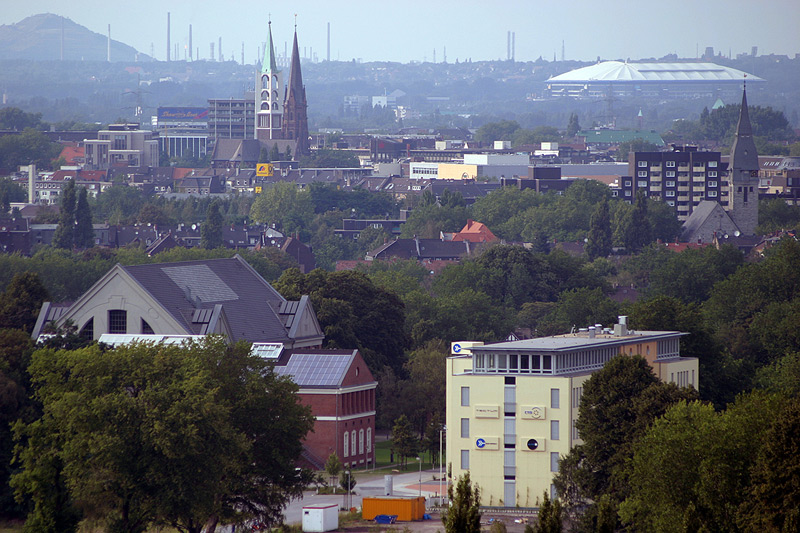
If you’re traveling to Gelsenkirchen to see Taylor when the Eras Tour comes to Germany, here’s everything you need to know.
Hey there, Swifties! I’m Grace, a freelance journalist originally from Ohio living in Berlin since 2017. Back in the late 1990s, I was part of an foreign exchange program that sent me from the American Rust Belt to the heart of Germany’s Rust Belt, the Ruhrgebiet.
That’s why I know so much about Gelsenkirchen a city of about 260,000 people that is not on most Americans’ radars. I’ve got a lot of love for the city, and I still visit my host mom there regularly.
I like to call Gelsenkirchen the Dayton, Ohio of Germany — people elsewhere in Germany have heard of it, but they’ve probably never visited it, and they definitely wouldn’t go on vacation there. But the people who live there are proud of their coal mining history and their local football team, Schalke 04.
And honestly, there are lots of little gems when you know the right places to look. I’ve written about Gelsenkirchen and its economy before, and there are not a lot of English-language travel tips for Gelsenkirchen out there. As the Taylor Swift Eras Tour dates come ever closer, I realized I have a lot of hyperlocal knowledge that could be helpful for the many people flying to Germany for the shows. I hope you enjoy your time in the Ruhrpott, and maybe I’ll see you there!
Last updated 4 July
Disclaimers: I am not affiliated with Taylor Swift or the city of Gelsenkirchen whatsoever. I have diligently researched this piece, but there may still be errors or changes to information since the publish time, so please confirm opening times and dates yourself. I obviously bear no responsibility for the content on any third-party sites I link to. I may earn a portion of sales from products that are purchased via affiliate links from my site.
A little orientation and history
You might be wondering: Why the hell is Taylor playing three nights in a city of 260,000 people? Veltins Arena, aka Arena AufSchalke, is one of just 15 stadiums in Germany that can hold more than 45,000 people — and only five of those were built since the millennium. Plus, Gelsenkirchen is near the center of the Rhine-Ruhr conurbation, which is home to more than 10 million people. I like to describe the region to Americans that it’s like if all of Ohio’s cities were gathered down in the southwest corner — it’s that densely populated.
In 1960, Gelsenkirchen’s population was nearly 400,000, with many people employed in coal mining and steelworking. As those businesses closed in the 1990s, the population also declined, and today Gelsenkirchen has the highest rates of unemployment and child poverty in the country. When Gelsenkirchen came in dead last on a list of Germany’s 401 most liveable cities in 2018, locals turned the ranking into a hashtag — #401ge — that people use to show the city’s good sides. And there’s so much good stuff here! Gelsenkirchen is not Berlin, but you will find some great food, cool sights and very lovely people.
Veltins Arena is a big bright spot for the city — it can hold more than 60,000 fans, so it regularly hosts big concerts and sports events, like the Euro Cup, which is happening now. But generally the events here draw local fans, so Gelsenkirchen only has about 1,000 hotel rooms, which is fine under normal circumstances. But with many Swifties coming from overseas to catch the Eras Tour in Europe, these are extraordinary circumstances!

Taylor Swift Eras Tour in Gelsenkirchen
First, the basics. The official ticket sales point is Eventim. The dates with opening act Paramore at the Veltins Arena in Gelsenkirchen, Germany:
- Wednesday, 17 July, 2024
- Thursday, 18 July, 2024
- Friday, 19 July, 2024
According to the official events website, ticket holders with Early Entry (VIP 1 and 6) will be able to go in at 3:30 p.m., and general admission starts at 4:30 p.m. It seems likely that Paramore will go on at 6:15 p.m., with Taylor’s show starting at 8 p.m. The shows will probably finish around 11:30 p.m., based on other recent shows.
A note about tickets, which are so sold out: The only official resale channel is Eventim’s Fansale site. Some people have had luck finding tickets by constantly refreshing the site and catching tickets as soon as they’re posted. Germany has strict rules about reselling — protecting consumers from scalpers — and the tickets have to be transferred in the Eventim App with your name on them. I personally wouldn’t rely on Stubhub on tickets for the Eras Tour shows in Germany — too big a risk of getting scammed or being denied admission when you arrive at the arena. The event organizer recommends the main booker bring their booking confirmation email (on your phone or printed) and an official photo ID (driving license or passport). Your group must enter together, and there’s no re-entry after admission.
Rules at the arena: Children under 16 need to be accompanied by a parent or guardian, and no children younger than 6 will be admitted. Only bags smaller than 35 cm tall x 20 cm deep x 30 cm wide (13.5 in tall x 8 in deep x 12 in wide) are allowed to be brought into the stadium, and they’re subject to search. No outside food or drink is allowed, and glass and metal bottles are banned. If its rainy, the venue recommends weatherproof clothing like rain capes — umbrellas are not allowed at the arena. See all the rules here.
Regarding the party: The drinking age for beer and wine in Germany is 16, and for hard liquor it’s 18. Be prepared to show an ID if you look young.
Food and drink at the arena: Food and drink kiosks in the arena accept credit cards, EC cards (that’s a European debit card) and contactless payments only. Prices are reportedly €5.10 for a half liter of beer (if you buy six at once, you get an extra small beer free), €4.90 for a Coca-Cola and €4.20 for a water. (Note: Water fountains aren’t really a thing in Germany, so you’ll have to pay for bottled water most places you go.) A variety of traditional German snacks and many vegetarian/vegan food options are also available. You can see a map of where the kiosks are in the stadium and what they offer here.
Accessibility: The arena was built to be accessible, and there are details on access and arrivals here. The 302 and 301 trams are also accessible, with elevators available at the main train station. The event organizer says people with limited mobility should use the Willy-Brandt-Allee stop for the Arena. New buildings in Germany are being built barrier-free, but the country is kind of slow in making older buildings fully accessible. Many older restaurants and bars have their bathrooms in the basement that is only accessible down a tiny staircase — always call ahead to ask about the situation if stairs are an issue for you.
More nearby events and parties
The Taylor-adjacent parties and events in Gelsenkirchen and the Ruhrgebiet have just started being posted, so I’ll update this section when I find out about more events:
▪ Candlelight Tribute to Taylor Swift: A string quartet plays all your favorite hits by candlelight at Lichtspiel und Kunsttheater Schauburg in Dortmund on Thursday 11 July. Tickets are €54, and it’s nearly sold out!
▪ Welcome Taylor Party: Get the party going at Essence in central Essen, where the fun starts Friday 12 July at 11 p.m. and goes until 5 a.m. Tickets cost €15 to €20, open to 18+.
▪ The Euro Cup Finale free viewing: At Nordsternpark in Gelsenkirchen, they’ll be showing the UEFA cup finale on Sunday 14 July. Kickoff is 9 p.m., but free events at the park start at 3 p.m., and there are also free events happening the day before — no tickets needed. Germany is crazy for Fußball (soccer), so this will be a great introduction to local culture!
▪ 2-Stündchen Pop: Taylor Swift Special: The Tsunami Club in Cologne is doing a two-hour tribute to Taylor on Wednesday 17 July. Great way to warm up if you don’t have tickets to N1! Doors open at 8 p.m., the party starts at 9 p.m. and it costs €5 at the door.
▪ Taylor Town Party & Market: The city of Gelsenkirchen (which has temporarily renamed itself Swiftkirchen) is hosting a free party for Swifties at Heinrich-König-Platz in the central part of the city. They’re bringing food and drinks sellers, karaoke, a DJ and a DIY area that will be happening every day Taylor is in town: noon to 10 p.m. on 17, 18 and 19 July.
▪ Taylor Swift Party: If you didn’t get tickets for N3, come party at Hier Ist Nicht Da in Gelsenkirchen-Ückendorf instead! The free party starts at 6 p.m. on Friday 19 July. They’ll have special drinks, friendship bracelets, karaoke, a Polaroid photo corner and a heartbreak corner.
▪ The Haylor Party: After N3, take the 302 tram from the Arena straight to Untergrund Club near Bochum Rathaus for a night celebrating Taylor Swift and Harry Styles. The party starts at 11 p.m. Friday 19 July and goes until 5 a.m. the next morning. Tickets are €8.50.
Getting around
If you’re coming in to see Taylor Swift from out of town, you probably are staying in a nearby city like Essen, Bochum or Dortmund. No worries! The Ruhrgebiet is very well connected with public transportation networks and train lines.
Public transportation is your best bet
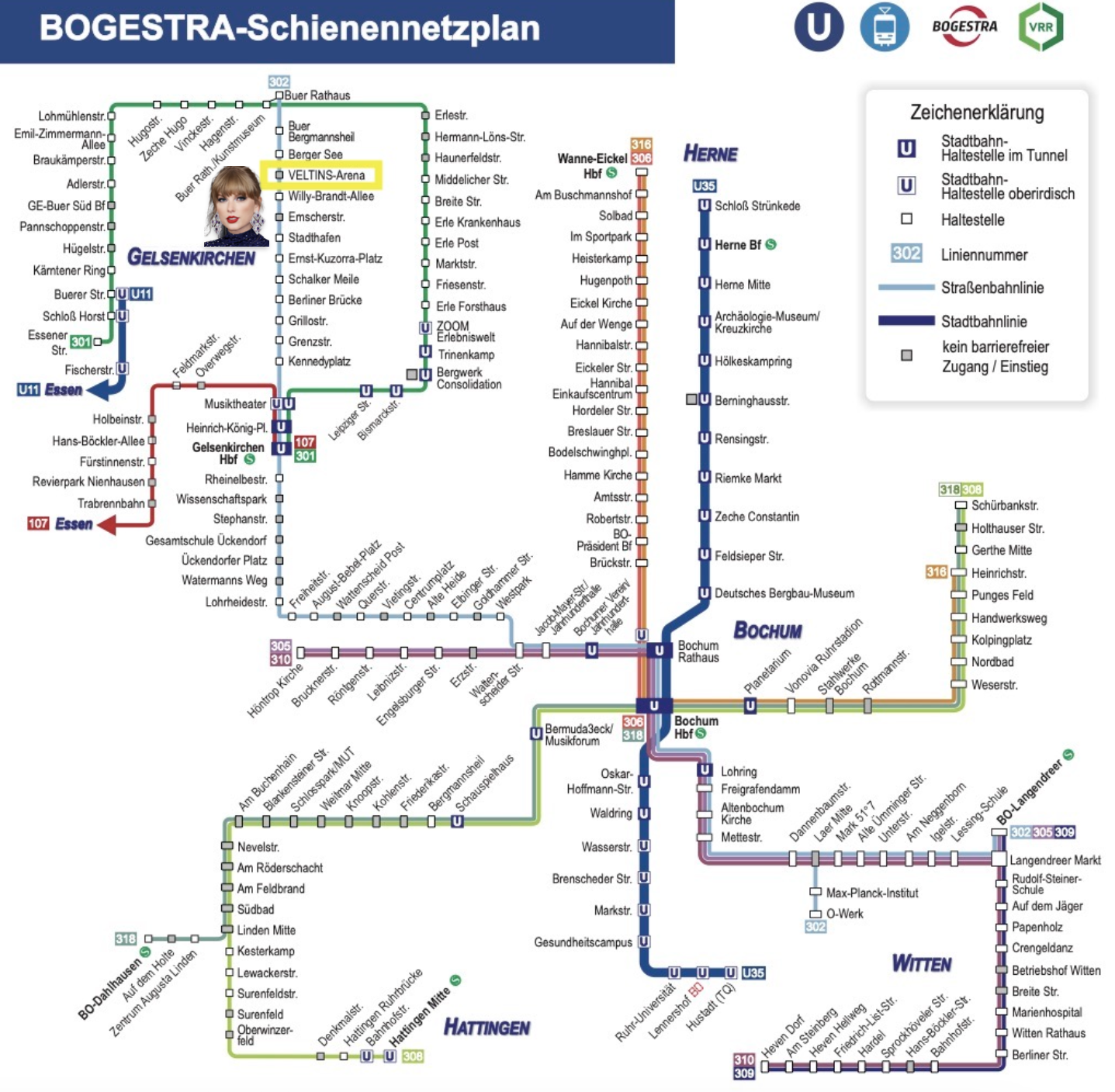
The 302 tram goes from the Arena north to Buer Rathaus and south to the Gelsenkirchen Hauptbahnhof (Hbf, or main station) which also goes on to Bochum Hbf. When big events are happening, they’ll run the 302 streetcars every two minutes, and sometimes they’ll also add extra shuttle buses. Here’s the map of the tram and subway network in Gelsenkirchen and Bochum:
Trips within the city of Gelsenkirchen by bus or streetcar cost €3.30 per ride. If you buy a ticket from a bus driver or inside a tram, it will be valid from the time of purchase. But if you buy a ticket at a station or another outlet, you’ll need to validate it by stamping it in one of the red ticket boxes on the platform or on the tram. If you buy a 4-er Ticket (four-trip ticket), you stamp it once for each ride you take. (Or once for each person who is riding on that ticket.)
If you’re in town for 24 or 48 hours, the cost of a transit pass for the whole of Gelsenkirchen (zone A) costs €8.30 or €15.80, respectively. These tickets are also offered for multiple people. VRR, the public transit organization for the region, prices tickets by zones, with your starting location as Zone A.
If you’re coming to Gelsenkirchen from a nearby city with a group of people, you should check out the SchönerTagTicket NRW, which is €34.80 for a single person or €52.20 for up to five people. These day passes let you take buses, streetcars, subways and regional trains anywhere within the state of North Rhine Westphalia (NRW).
You can buy train tickets and multi-day transit passes online at Bahn.de, per app or at stations. Always buy a ticket before boarding a train — there’s usually no possibility to purchase a ticket onboard.
Important note: These transit passes only let you take local transport and regional trains, which are the ones with numbers starting with S, RE and RB. You can’t make reservations for these trains — you just get on whichever one that’s going where you want. The faster trains, which have numbers that start with IC, EC or ICE, require specific tickets to be booked, and your ticket might be restricted to one specific train. (If you’re worried about missing a train or want to be able to be spontaneous with your long-distance travel, be sure to book a flexible rate.)
Most trains have first-class and second-class sections. A second-class ticket does not include a seat reservation. You can sit wherever you like in the section you have a ticket for as long as the seat isn’t otherwise reserved. You can be fined €60 for not having a ticket or not having the right ticket, and the ticket checkers don’t care if it’s your first time ever taking the train.
Trains from Gelsenkirchen Hbf run around the clock, with eight to 10 regional trains departing every hour between 10 p.m. and 4 a.m., so getting back to the city you’re staying in won’t be a problem. Essen Hbf, which is 15 minutes from Gelsenkirchen Hbf, is a major hub for long-distance trains.
Some more public transit etiquette
Never put your shoes up on the seats! You will be chided by Germans. Always offer your seat to elderly, disabled or pregnant people, especially if you’re sitting near the door.
When it’s your stop on a bus or tram, you press the stop button to signal to the driver you want to get off at the next one. If no one is waiting at a stop and no one has pressed the button, the driver might just sail past, especially at night.
In Germany, it’s customary to be ready at the door to disembark before your stop. People will grumble if you only get up from your seat and try to push through to the door after the vehicle stops. Always let disembarking passengers out of the vehicle before trying to get in.
Taking a taxi
There are always taxis waiting outside the main train station and the Arena, but these will be in high demand on show nights. The ridehailing apps that work in Gelsenkirchen and the surrounding areas are Uber and FreeNow. (Use my promo code grace.dob to get €10 in free credit on FreeNow.)
Taking a taxi within Gelsenkirchen to or from the Arena will cost €20–€40, depending on traffic. Going to the Arena aufSchalke, a taxi from Bochum will cost €35–€45, from Essen €60–€70, from Dortmund €70–€90, from Düsseldorf €100–€140. Honestly, if you’re traveling to Gelsenkirchen from another city with a rail station, taking a train is almost always faster and cheaper than a taxi.
If you are driving
There are a number of parking lots near the Veltins Arena, but everybody will be trying to arrive and leave at the same time, so be prepared to wait. The event organizer has designated parking lots C1, C2 and P6 as the drop-off and pick-up zone for the event. There is a park and ride lot at the ZOOM Erlebniswelt (P3), where you can park for free and take a shuttle bus to the Arena and back. The first shuttle leaves at 3 p.m. More details and maps are here.
Gelsenkirchen and the Arena are very close to the A2 highway, Exit 6, Gelsenkirchen-Buer. But I highly recommend taking public transit if at all possible. If you rent a car in Germany, I recommend reading over this guide to local traffic laws and signs, because there are some differences from North America.
Travel in Germany tips
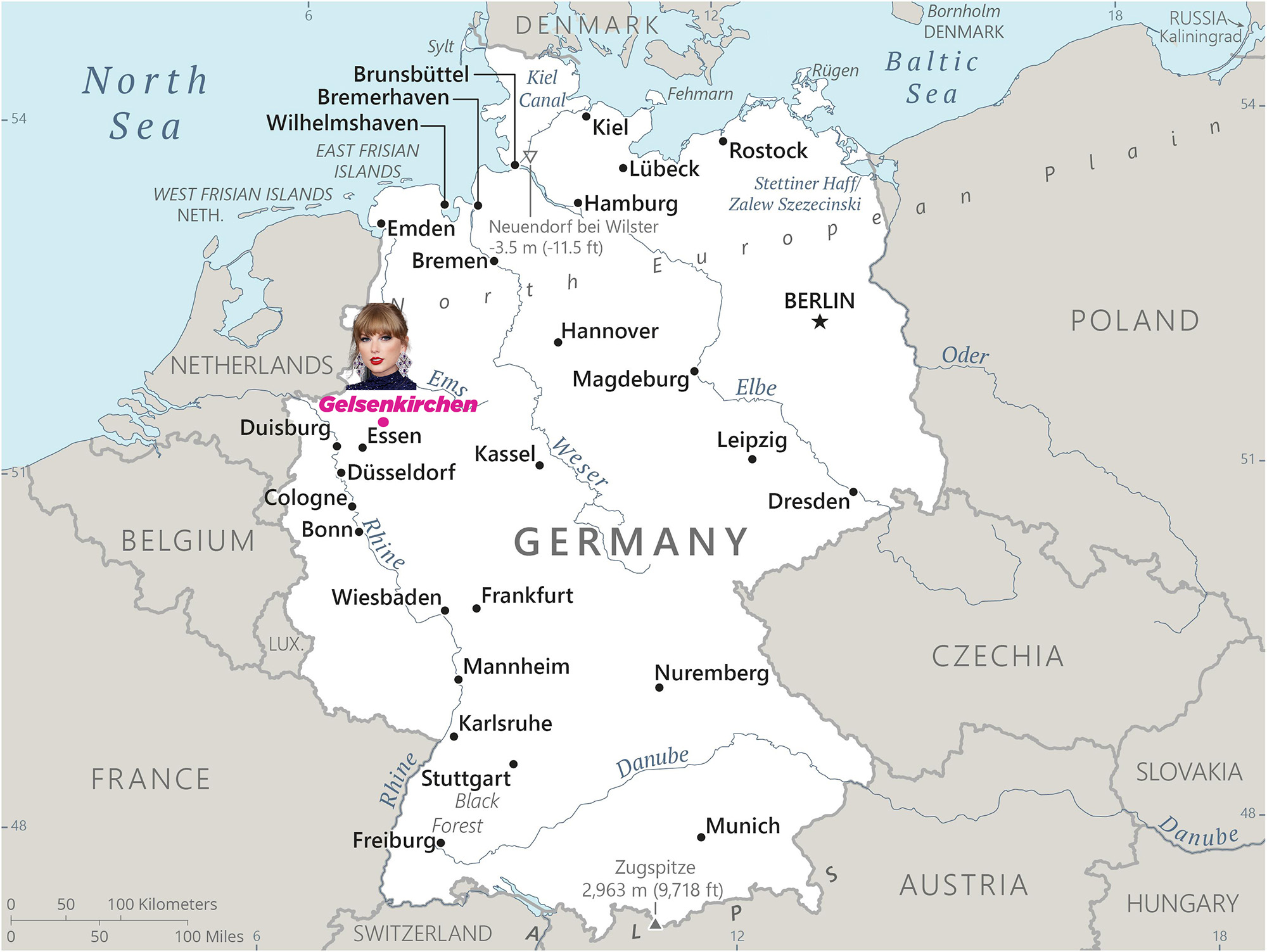
If this is your first time visiting Germany, welcome! Gelsenkirchen is a kinda weird place to land for your first time, but we’re gonna make it great! Like I mentioned above, Gelsenkirchen is in the heart of the Ruhrgebiet, an area with a bunch of cities and more than 10 million people. It’s in the state of North Rhine-Westphalia, which includes cities like Düsseldorf, Cologne and Bonn on the beautiful Rhine River. (See my recommendations for where to go below this section.)
Learn a little German if you can. In a big city like Berlin, many people are able/willing to speak English, but the smaller the city, the more likely it is you’ll encounter a German who can’t or won’t speak English. Learning a few phrases of German will help grease the wheels and show the locals that you are trying!
Be prepared for European power plugs. You can buy adapters at electronics stores like MediaMarkt or Saturn, but I recommending bringing one like this with you if you’re coming from the U.S.,; if you’re traveling with a group, buy a bunch of little ones. They’ll be fine to charge phones, cameras and small devices. One important thing to note if you’re coming with a laptop or other larger appliance is the difference in power. Europe uses 230 volts, whereas North America uses 120 volts, so those will need a power converter rather than just a plug adapter.
Be prepared for warmer weather. People from warmer climates might be surprised to see that air conditioning is rather rare in Germany. Until recently, the summers haven’t been so hot as to warrant it, but global warming is real, man. The daytime temperatures in July in NRW usually top out around 80F (27C), but recent summers have brought occasional heatwaves of up to 95F (35C). Bring a hand fan and a wide-brimmed hat to be prepared! Newer public transportation (like streetcars, buses and fast trains) will have air conditioning, but older regional trains might not. Hotels probably have air conditioning (look for klimatisiert), but it’s not guaranteed, and private homes definitely won’t. Shopping centers and newer grocery stores are likely to have A/C, but small retailers and restaurants won’t. Historical cathedrals, castles, caves and mines are cool by design, so check those out on a hot day. Public drinking fountains exist in GE in limited amounts, and there are a few public pools throughout the city.
Don’t cross on red. The Germans are a rule-abiding people, and even in big cities like Berlin, crossing a street while the light is red can get you a dressing down. Be safe and wait for the green light to cross the street!
Overall, Germany has very little crime. There are two numbers you need to know for emergencies in Germany: 110 connects you to the police emergency line (to report an assault or robbery, for example) and 112 to the fire and ambulance services (for a house fire, life-threatening illness or car accident, for example).
But be aware of pickpockets. Especially on crowded shopping streets, always be aware of your surroundings and keep valuables hidden away. Also be aware that Gelsenkirchen is one of the poorest cities in Germany, so maybe leave the Louis Vuitton at home.
Always carry cash. More places are accepting card and contactless payments now, but cash is still king in Germany. Chain retail and restaurants will likely take cards, but small restaurants and street vendors are likely to only accept cash payments. (And some restaurants only accept EC cards, which are European debit cards.) I recommend getting euros once you arrive in Germany from an ATM — I find the ones from banks such as Sparkasse, Commzerbank and Postbank are most likely to not charge extra fees. Trying to exchange money in person will cost you more.
Tipping is nice but not necessary. When you pay for a meal or drinks in Germany, tipping isn’t mandatory, but it is appreciated. You add your tip to the total of your bill while you’re paying. Let’s say your waiter tells you your bill is €12.50 — you can hand him a €20 and say “14.” He’ll say thank you and give you €6 back. Or if you’re paying by card, say the total amount you’d like to pay including tip after you’re presented with the bill but before the waiter punches in the amount on the device. A tip of 10% is considered generous for a sit-down meal; for a single drink, a takeout meal or a coffee, you might just round up to the next euro. There’s generally no tipping at fast food joints.
Public toilets aren’t as common as you might like. Gelsenkirchen has helpfully put together a list of the public WCs here, and a few restaurants are also making their toilets free to the many guests in town this summer. (WC is an abbreviation for “water closet” is commonly used to signify a public bathroom.) Many WCs in shopping malls and train stations will charge you 50 cents or even €1 for the privilege of using their facilities. (It’s considered rude not to leave 50 cents if there’s a plate out for the bathroom attendants.) Most pubs and restaurants will let non-guests use their toilet for 50 cents — but it’s free for customers. Cafes in tourist areas might require a code or a key to use the WC.
Things to see, do and eat
Near the stadium you’ve got quite a few big chain restaurants: L’Osteria, Cafe del Sol and Xiao, which are all sit-down restaurants, plus KFC, Burger King and McDonalds. There are also a number of local snack shops across from the stadium, including 45 Burgers and Curry Heinz. Definitely try a Currywurst mit Pommes while you’re in Gelsenkirchen — it’s sausage with curry sauce and fresh french fries plus mayo if you want it. Delicious!
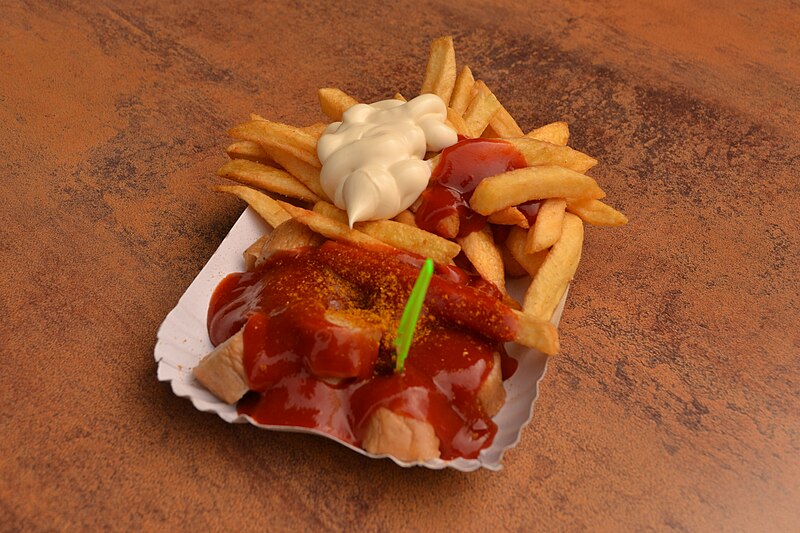
This is Berliner Currywurst and Pommes — please forgive me.
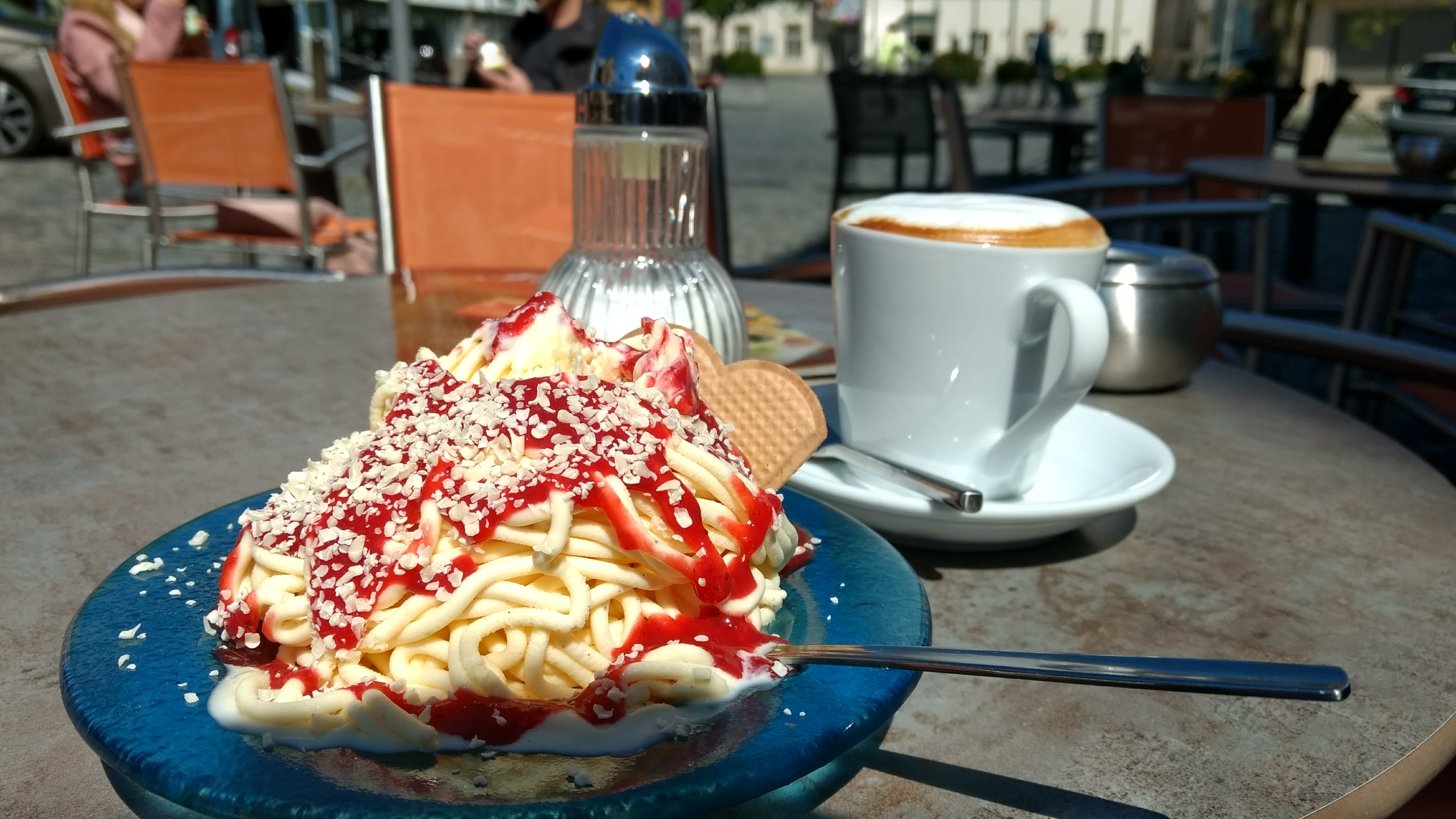
Another German delicacy you should definitely try is Spaghetti-Eis. It’s ice cream extruded to look like spaghetti, with strawberry sauce and sprinkled white chocolate on top. Most ice cream parlors (Eiscafes) offer a version of this novelty sundae. Germans love ice cream, and almost every neighborhood will have an ice cream parlor where you can get a cone for under €2!
I saw some Swifties are being dropped off at the stadium by partners who then have the evening to kill. I have suggestions! Apollo Cinemas is right around the corner and shows some movies in the original English with German subtitles. Sportparadies is right next to the cinema and arena and is open for swimming and bowling until 10 p.m. each night. Marktkauf, the closest thing to a Walmart here, is down the road and open 7 a.m. to 10 p.m. every day except Sunday.
The city tourism website is right here. If you’re staying in Gelsenkirchen and want to explore the city, I have some specific recommendations of places to go:
Central Gelsenkirchen
▪ Bahnhofstraße shopping street: This is a big pedestrian zone with lots of shopping possibilities, with many cafes and restaurants.
▪ Heinrich König Platz: There are often events and markets happening here at the top of Bahnhofstraße.
▪ Rosi: A bar/cafe that feels like hanging out in your cool friend’s living room!
▪ Trinkhalle am Flöz: Another very laid-back wine and beer bar that lets you feel like a part of the neighborhood.
▪ Cafe Utelier: The area of Ückendorf is known for its artists’ galleries, and this is a cafe that’s very cool.
▪ Handzade Restaurant: This Turkish restaurant just south of the main train station is a great option for groups and families. This area called Neustadt has lots of restaurant options with outdoorseating.
Gelsenkirchen North
▪ Buer’s shopping zone: The pedestrian area on Hochstraße near the Buer Rathaus station is great to explore, have a coffee or ice cream and people watch.
▪ Schloss Berge: This gorgeous castle (really more of a manor) in Buer also has a Biergarten that’s open every day.
▪ Destille Buer: Just north of the Arena, this pub is a favorite for Schalke fans, as you’ll see from the blue and white decor everywhere.
▪ Buer1: Near the shopping zone, this spot does an absolutely delectable Turkish brunch for about €20 per person. See the Instagram post above for the presentation with dry ice!
▪ Vietnam Royal: I dare say this is the best Vietnamese restaurant in Gelsenkirchen, right near the Buer shopping zone.
▪ Zipper Bakery Cafe: This industrial chic cafe in Erle is a fairly new addition to the city, but the Zipper Bäckerei is an institution.
▪ Ebbens Imbiss: This is where I always go to get my Currywurst fix when I’m in Erle.
▪ Zoom Erlebniswelt: If you’ve got little ones with you, this zoo is a lovely way to spend a day.
▪ Hafenquartier Graf Bismarck: This new development on a canal harbor is a lovely place to get an ice cream or an Aperol spritz and chill. There is a shopping boat trip to CentrO that departs from the harbor twice a week!
Gelsenkirchen West
▪ Schloss Horst: Another Renaissance-era castle with a historical museum and a large garden.
▪ Nordsternpark: This former coal mining site has been turned into a public recreation area with an amphitheater.
▪ Marx and Lenin: Gelsenkirchen is home to a communist party in Germany, which recently erected a Marx statue to match its Lenin statue. I think they need some friendship bracelets…
Notable in nearby cities
Essen (15 minutes from GE by train): Zeche Zollverein is a coal mine turned UNESCO Heritage site, with lots to explore. The Red Dot Design Museum is on the same campus and also absolutely worth a look. Rüttenscheid is a hip shopping district a little south of Essen Hbf with lots of restaurants and cafes. Limbecker Platz is a more mainstream shopping destination.
Bochum (30 minutes from GE by streetcar or train): The Bermuda Dreieck neighborhood is a party zone every night of the week, with bars and restaurants catering to everyone from college students to Schlager (German pop) fans. Kult is a fantastic karaoke bar open Thursdays, Fridays and Saturdays. The nearby Ehrenfeld neighborhood also has great shops and restaurants. Starlight Express, a musical by Andrew Lloyd Webber in which all actors are on rollerskates, has been running continuously in Bochum since 1988.
Düsseldorf (45 minutes from GE by train): If you’re flying in or out of DUS, you’ll want to take a day to explore the city if you can! Düsseldorf has a very fancy shopping street colloquially called the Kö — short for Königsallee. It’s a beautiful place to spend a day walking around, sipping drinks and shopping. Manufactum (which is also in Cologne) is an amazing department store that focuses on quality, not quantity. Right near the river is the beautiful Kunstpalast art museum. Make sure to have a meal (or two) in Little Tokyo — Düsseldorf has the largest Japanese community outside of Japan.
Cologne (1–1.5 hours from GE by train): To me, Köln is like a little Berlin — it’s big, international and kinda grungy. The Cologne Cathedral is a must-see, of course. You can spend hours walking around the city, exploring all the pedestrian shopping zones. My biggest shopping tip is the stationery store Ortloff. RIP to your wallet. The Chocolate Museum is also fun!
Bonn (1.5 hours from GE by train): If you go south from Cologne, you’ll find the former West German capital. This is a pretty small city, but there are cool museums and old buildings to see. My secret shopping tip here is that a bit south of Bonn you’ll find both a Haribo outlet and a Birkenstock outlet. If you have time, definitely look into a Rhine River day trip!
Here are the travel times by high-speed train to other major cities in Germany from Gelsenkirchen:
- ▪ Frankfurt: 2.5 hours
- ▪ Hamburg: 3.5 hours
- ▪ Stuttgart: 3.5 hours
- ▪ Berlin: 4 hours
- ▪ Munich: 5.5 hours
Gelsenkirchen shopping tips
Gelsenkirchen’s local retail is a bit limited, but you’re not far from big shopping centers such as Westfield CentrO in Oberhausen, the biggest mall in Germany, as well as Westfield Ruhr Park in Bochum.
If you’re coming from outside the EU, remember to save your big receipts for VAT refunds before you leave! For most goods in Germany, you can get back 19% of the purchase price if the item cost more than €270. Read more details here.
To experience a real slice of German life, go to one of the regular open air markets that happen throughout the city in the mornings. You can buy fresh fruits and veggies, cheeses, meats and gifts, and have a coffee and people-watch. Some of the market locations also do after-work events that have drinks and entertainment as well.
Be aware that most stores are closed on Sundays across all of Germany. In bigger cities you might be able to buy necessities at stores in train stations if you are in a pinch on a Sunday.
Here’s a general guide to things that you might need while visiting Gelsenkirchen:
▪ For groceries, look for Rewe, Edeka, Aldi or Penny.
▪ For toiletries, cosmetics and other drugstore items, go to DM, Rossmann or Müller. Honestly, I get most of my gifts to bring home to the U.S. from drugstores like DM — Nivea is better here!
▪ For medicine, look for an Apotheke (pharmacy), which will have a green cross sign. In Germany, medications are only sold at pharmacies, even non-prescription meds like ibuprofen or allergy pills.
▪ For friendship bracelet supplies, go to idee Creativmarkt — they have stores in Essen, Bochum, Dortmund and Duisburg.
▪ For gifts, check out the Mayersche book stores, which always have nice local books and souvenirs to take home, like a lump of coal!
Phew! I think that’s everything. If you want to know anything else, let me know in the comments! I hope you enjoy your time in Gelsenkirchen. Glück auf!
 grace dobush
.jpg)
Hi, this is a good and complete guide for foreigners coming to Gelsenkirchen!
With “Haus Reichstein”, which is a model projekt for the recovering and renovation of old damaged houses, you shurely mean “Cafe Ütelier” in the basement of this house, which is called the hippest cafes in Gelsenkirchen!
Thanks for that note! I’ll fix it now.
Wow, this has been a lifesaver of an article, thank you!!!
Really nice! thanks a lot!!
I’m a native Gelsenkirchen citizen and live next street to Vietnam Royal Restaurant. I agree, best Vietnamese Restaurant in town. Best Greek restaurant is Pandossia on Hochstraße. Best Greek Fastfood is Dionysos near Hans-Sachs-Haus.
Your blog article has made it to a German news website after a shitstorm has rained down to Gelsenkirchen in last few days after the British football fans experienced some problems with the public transport by 302 off the stadium.
It’s great to read some kind words about my city, which has seen better days but still has some lovely corners and very open-hearted people. All your recommendations of locations are worth to visit. Most of the younger people speak English more or less well. Don’t hesitate to ask them “sprechen Sie Englisch”, they will glad to help you out. Be welcome in Germany, be welcome in Gelsenkirchen.
I live like 30mls away from Swiftkirchen. Congratulations for this very informativ article. Even though I live nearby I learned new things about the city.
Hi, Thank you very much for this guide! It’s wonderful. I was wondering is there a way to book a parking ticket in advance? Cause I couldn’t find it anywhere. Or is it just first come first serve with the cars?
I believe a lot of the reserved parking is sold out at the stadium now. The parking at the shuttle lot at Zoom Erlebniswelt is free but first-come, first-served.
Howdy – thanks for all the good details. Regarding using a train to get around, is there much of any difference between the SchönerTagTicket NRW tickets and 24/48-StundenTickets (24/48 hour)? We are looking for coverage just between Essen and the Arena and I think the 48hr ticket would end up being enough.
the 24/48-hour tickets are priced by zone, so for coverage from Essen to Gelsenkirchen only, they’re probably more affordable! NRW is for the entire state.
Hi, thanks for this detailed info but I have still an extra question. We booked an hotel at Bochum for after the show the 18th. Until which hour after the show will the line 302 be riding between the Veltins Arena and Bochum Hbf?